
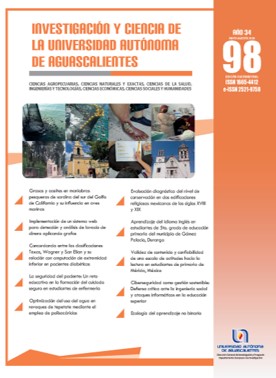
Cybersecurity as sustainable management: Critical defense against social engineering and cyberattacks in higher education
DOI:
https://doi.org/10.33064/iycuaa2026988640Keywords:
Cyberattacks, cybersecurity, digital culture, higher education, social engineering, sustainable managementAbstract
Cybersecurity is a strategic component of sustainable management in higher education institutions amid the growing incidence of social engineering and cyberattacks that threaten information security and academic continuity. This study aimed to identify the main cybersecurity risks and analyze prevention and response strategies from technological, organizational, and human perspectives. A qualitative documentary approach was employed through an analytical review of scientific literature, regulations, and specialized studies. The findings show that phishing, malware, and social engineering are the most common threats, while insufficient training, the lack of comprehensive policies, and user behavior are the main vulnerabilities. It is concluded that cybersecurity should be understood as a continuous process that strengthens organizational resilience and safeguards institutional information.
Downloads
References
• Ahmad, A., Maynard, S. B., & Park, S. (2014). Information security strategies: Towards an organizational multi-strategy perspective. Journal of Intelligent Manufacturing, 25(2), 357–370. doi:10.1007/s10845-012-0670-6
• Alshaikh, M. (2020). Developing cybersecurity culture to influence employee behavior: A practice perspective. Computers & Security, 98, 102003. doi: 10.1016/j.cose.2020.102003
• Bada, M., Sasse, A. M., & Nurse, J. R. C. (2019). Cyber security awareness campaigns: Why do they fail to change behaviour? arXiv. Recuperado de https://arxiv.org/abs/1901.02672
• Bordoff, J., & Green, A. (2021). Cybersecurity governance in higher education institutions. Journal of Higher Education Policy and Management, 43(4), 389–403. doi:10.1080/1360080X.2021.1915383
• Da Veiga, A., & Eloff, J. H. P. (2010). A framework and assessment instrument for information security culture. Computers & Security, 29(2), 196–207. doi: 10.1016/j.cose.2009.09.002
• Furnell, S., & Clarke, N. (2012). Power to the people? The evolving recognition of human aspects of security. Computers & Security, 31(8), 983–988. doi: 10.1016/j.cose.2012.08.004
• González, J., & Ramírez, M. (2020). Cultura de ciberseguridad en instituciones universitarias. Revista Iberoamericana de Educación Superior, 11(31), 45–60. doi:10.22201/iisue.20072872e.2020.31.589
• Hadlington, L. (2018). Human factors in cybersecurity: Examining the link between impulsivity and risky security behaviors. Heliyon, 4(7), e00646. doi: 10.1016/j.heliyon.2018.e00646
• Ifinedo, P. (2014). Information systems security policy compliance: An empirical study of the effects of socialisation, influence, and cognition. Information & Management, 51(1), 69–79. doi:10.1016/j.im.2013.10.001
• Martínez, A., & López, P. (2019). Gestión sostenible y transformación digital en universidades. Revista de Educación y Desarrollo, 50, 23–38. Recuperado de https://www.cucs.udg.mx/revistas/edu_desarrollo/anteriores/50/50_Martinez.pdf
• Pérez, L., & Salinas, R. (2022). Ingeniería social y riesgos digitales en entornos educativos. Educación y Tecnología, 16(2), 77–91. Recuperado de https://revistas.uv.cl/index.php/edytec/article/view/3120
• Puhakainen, P., & Siponen, M. (2010). Improving employees’ compliance through information systems security training: An action research study. MIS Quarterly, 34(4), 757–778. doi:10.2307/25750704
• Sánchez, D., & Torres, J. (2021). Gobernanza digital y ciberseguridad universitaria. Revista Latinoamericana de Tecnología Educativa, 20(1), 33–48. Recuperado de https://relatec.unex.es/article/view/3998
• Schneier, B. (2015). The human side of security. Computer, 48(7), 66–68. doi:10.1109/MC.2015.198
• Soomro, Z. A., Shah, M. H., & Ahmed, J. (2016). Information security management needs more holistic approach: A literature review. International Journal of Information Management, 36(2), 215–225. doi: 10.1016/j.ijinfomgt.2015.11.009
• Tøndel, I. A., Line, M. B., & Jaatun, M. G. (2014). Information security incident management: Current practice as reported in the literature. Computers & Security, 45, 42–57. doi: 10.1016/j.cose.2014.05.003
• Von Solms, R., & Von Solms, S. (2018). Cybersecurity and information security—What goes where? Information & Computer Security, 26(1), 2–9. doi:10.1108/ICS-04-2017-0021
• Wang, J., Li, Y., & Rao, H. R. (2020). Coping responses in cybersecurity incidents: A socio-technical perspective. Journal of Management Information Systems, 37(3), 837–865. doi:10.1080/07421222.2020.1790208
• Yeboah-Boateng, E. O., & Amanor, P. M. (2014). Phishing, SMiShing & Vishing: An assessment of threats against mobile devices. Journal of Emerging Trends in Computing and Information Sciences, 5(4), 297–307. Recuperado de https://www.cisjournal.org/journal_archive/papers/vol5no4/vol5no4_7.pdf
• Zwilling, M., Lesjak, D., Wiechetek, Ł., Cetin, F., & Basim, H. N. (2022). Cyber security awareness, knowledge and behavior: A comparative study. Journal of Computer Information Systems, 62(1), 82–97. doi:10.1080/08874417.2020.1712269
Downloads
Published
How to Cite
License
Copyright (c) 2026 Ricardo Manuel Candanedo-Yau

This work is licensed under a Creative Commons Attribution-NonCommercial-ShareAlike 4.0 International License.
The papers published in electronic version of the journal are under the license Creative Commons Atribución-NoComercial-CompartirIgual 4.0 Internacional (CC BY-NC-SA 4.0)